How Live Streaming Is Changing Social Media
How Live Streaming Is Changing Social Media in 2026: From Scrolling to Real-Time Interaction
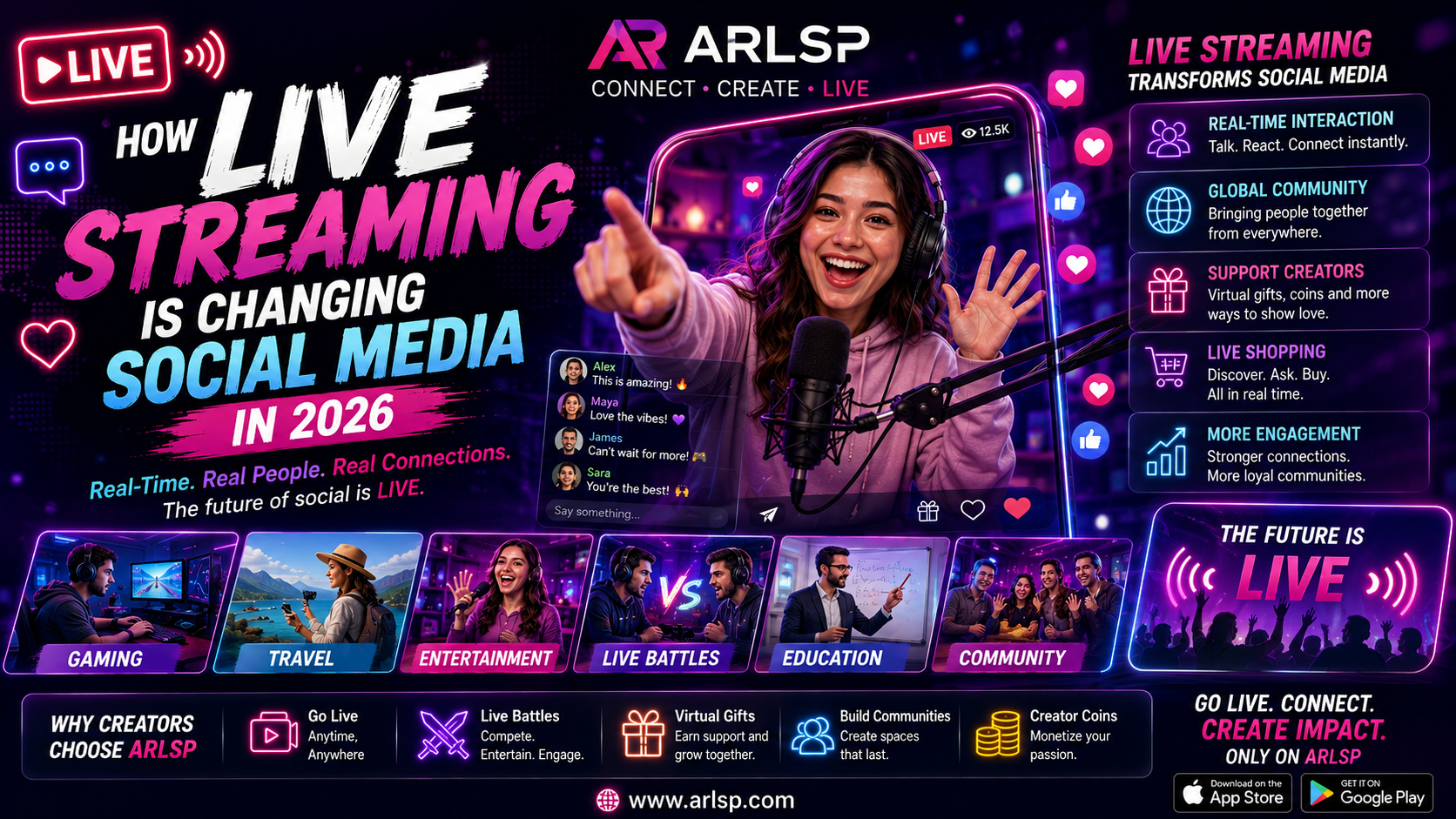
Introduction
Social media used to be primarily about posting.
A photo.
A status.
A short video.
A link.
Then audiences began expecting something more immediate.
They wanted to see what was happening right now.
They wanted to interact with creators while the content was happening.
They wanted to comment and receive a response.
They wanted to participate in games, challenges, conversations, competitions, travel experiences, entertainment, and online communities.
That shift has helped make live streaming an increasingly important part of the social media experience.
Live video changes the relationship between creator and audience.
Instead of:
Create → Publish → Wait
the experience becomes:
Go Live → Interact → Respond → Participate → Build Community
And that difference is significant.
In 2026, live streaming is no longer simply a way to broadcast video.
It is becoming a way for creators and audiences to experience social media together in real time.
What Is Live Streaming on Social Media?
Live streaming allows creators, organizations, entertainers, gamers, educators, businesses, and communities to broadcast video while interacting with an audience in real time.
A livestream may include:
Live video
Comments
Reactions
Questions
Virtual gifts
Audience participation
Creator collaborations
Games
Challenges
Shopping
Community discussions
Unlike a traditional post, a livestream creates a temporary shared event.
People are there at the same time.
Something happens.
People react.
The creator responds.
That creates a different type of social experience.
Social Media Is Moving From Content to Experience
One of the biggest changes is the movement from simply consuming content to participating in it.
Consider a traditional video.
You watch it.
You might like it.
You might comment.
But the creator may never see your comment while you're watching.
Now compare that with a livestream.
You ask:
"Which game should we play?"
The creator sees your comment.
They answer.
Then they change what they're doing.
Suddenly, your interaction has influenced the content.
You are no longer just watching.
You are participating.
Why Real-Time Interaction Matters
Human beings naturally respond to interaction.
When a creator answers a viewer's question during a livestream, that viewer receives something different from watching a recorded video.
There is immediacy.
There is recognition.
There is unpredictability.
And there is a sense that the moment is happening with you.
This is one reason live streaming can be particularly effective for community-oriented creators.
The Difference Between Social Video and Live Video
Social video is excellent for discovery.
A short clip can reach someone who has never heard of the creator.
The person can watch the video within seconds.
But live video has a different advantage.
It can deepen the relationship.
Think of the journey like this:
Social Video
↓
Discovery
↓
Creator Profile
↓
Interest
↓
Live Streaming
↓
Interaction
↓
Community
The two formats don't have to compete.
They can work together.
Live Streaming Creates a Two-Way Conversation
Traditional content is often one-directional.
Creator → Audience
Live streaming can become:
Creator ↔ Audience
The audience can ask questions.
The creator can respond.
The audience can suggest ideas.
The creator can react.
A viewer can influence the direction of the livestream.
This two-way communication is one of the defining characteristics of interactive live video.
Live Streaming Is Changing Creator Culture
Creators increasingly have opportunities to become more than video publishers.
They can become:
Hosts
Entertainers
Community leaders
Educators
Gamers
Performers
Interviewers
Product demonstrators
Social personalities
A creator can build an identity around what happens live, rather than only around what they upload.
Gaming Is a Major Live Streaming Format
Gaming and live streaming are naturally compatible.
A creator can broadcast gameplay while talking to viewers.
But modern gaming streams can go beyond gameplay.
Creators can add:
Challenges
Competitions
Viewer decisions
Multiplayer sessions
Reactions
Strategy discussions
Creator collaborations
The audience becomes part of the gaming experience.
Live Battles Add Competition
Competition can make live content even more interactive.
ARLSP's Live Battle feature provides a creator-versus-creator format where two creators can compete while their audiences watch and interact.
This creates a different social structure:
Creator A
vs.
Creator B
↓
Audience Interaction
Instead of simply watching one creator, viewers have a reason to follow the competition and react to what is happening.
For creators, recurring Live Battles can also become a recognizable content format.
Travel Is Becoming More Interactive
Travel content is another area where live streaming can change the experience.
A recorded travel video shows viewers what happened.
A livestream can allow viewers to experience part of the journey while it is happening.
A creator might ask:
"Should we go left or right?"
"Which food should I try?"
"What do you want to see next?"
Now the audience isn't simply watching a destination.
They are helping shape the experience.
Entertainment Becomes More Participatory
Entertainment has traditionally been designed around audiences watching performers.
Live social platforms can introduce more interaction.
Creators can host:
Games
Challenges
Q&As
Reactions
Conversations
Competitions
Community events
The audience can become part of the entertainment rather than remaining completely passive.
Live Streaming Is Changing Social Commerce
Social commerce is another area where live video can be useful.
Instead of simply displaying a product, a creator can demonstrate it live.
Viewers can ask:
"How does it work?"
"What size is that?"
"Can you show the other option?"
The creator can respond immediately.
This creates a more conversational shopping experience.
ARLSP's ecosystem includes live shopping and product showcase functionality, creating opportunities for creators and sellers to combine video, interaction, and commerce.
Why Live Video Can Build Trust
Trust doesn't automatically come from livestreaming.
But repeated, authentic interaction can help audiences understand a creator better.
People see:
How the creator speaks
How they answer questions
How they react to unexpected situations
How they communicate with their audience
How consistently they show up
Over time, these repeated interactions can contribute to a stronger creator-audience relationship.
Live Streaming Makes Community More Visible
In traditional social media, community can sometimes feel like a collection of comments.
During a livestream, community becomes more visible.
You may see:
People asking questions
People responding to each other
People reacting simultaneously
Regular viewers returning
Creators recognizing community members
The audience starts to feel less like a number and more like a group.
The Rise of the Returning Viewer
A viral view is useful.
But a returning viewer can be even more valuable for a creator building a long-term community.
Imagine someone who discovers a creator through a short video.
They watch the livestream.
They enjoy the experience.
They return next week.
Then again.
Eventually, they recognize other members of the community.
That creates a progression:
Viewer → Regular Viewer → Community Member
This is where live streaming can have a particularly strong role.
Social Media Is Becoming More Real-Time
Traditional social content often operates asynchronously.
You post.
People see it later.
Live streaming reverses that pattern.
The content exists in the present.
The audience exists in the present.
The interaction exists in the present.
This creates a stronger sense of immediacy.
Why Unpredictability Is Valuable
Recorded content can be carefully edited.
Live content cannot be completely controlled.
That creates uncertainty.
A creator may not know:
What question comes next
Which challenge will succeed
What viewers will choose
How a competition will end
What unexpected event might occur
That unpredictability can make live content exciting.
Live Streaming Can Turn Ordinary Activities Into Content
Creators don't always need a huge production.
A livestream can revolve around:
Talking
Walking
Gaming
Cooking
Traveling
Creating something
Answering questions
Teaching
Exploring
Collaborating
The interaction itself becomes part of the content.
The Creator Economy Is Becoming More Interactive
The creator economy isn't only about producing content.
It increasingly involves:
Audience → Creator
and:
Creator → Audience
and:
Audience ↔ Community
Live streaming sits naturally in the middle of these relationships.
Creators can entertain.
Educate.
Interact.
Build communities.
And, depending on the platform and eligibility, explore monetization.
Virtual Gifts Create Another Interaction Layer
Virtual gifts can provide audiences with another way to interact with creators.
On ARLSP, virtual gifts and creator coins form part of the platform's broader in-app ecosystem.
This allows creator experiences to include forms of audience support while keeping the interaction inside the platform.
Importantly, creators should focus on delivering meaningful content rather than turning every livestream into a sales pitch.
Creator Monetization Is Becoming More Diverse
The modern creator economy can include multiple monetization opportunities.
Depending on the platform and creator eligibility, these may include:
Virtual gifts
Subscriptions
Sponsorships
Advertising
Affiliate opportunities
Live commerce
Premium experiences
Creator programs
Live streaming adds an important ingredient:
real-time engagement.
That can make monetization feel connected to the actual creator experience rather than completely separate from it.
ARLSP and the Interactive Social Experience
ARLSP is designed around the combination of live video, social interaction, creator communities, and monetization-oriented features.
Its ecosystem includes:
Live Streaming
Live Battles
Virtual Gifts
Creator Coins
Communities
Messaging
Notifications
Live Shopping
Product Showcases
Audience Interaction
This creates a broader experience than simply uploading video.
A creator can use live content as the central activity while using social and community features to maintain engagement around it.
Why Emerging Creators May Benefit From Interactive Platforms
The largest platforms can provide enormous reach.
But creators also need opportunities to build relationships.
An emerging creator doesn't only need:
More impressions.
They need:
People who care.
Interactive platforms can give creators opportunities to experiment with:
Different livestream formats
Community content
Creator collaborations
Challenges
Live Battles
Entertainment
Gaming
Travel
Social conversations
The objective is to turn attention into participation.
Live Streaming and Short Video Are Better Together
It is easy to think of them as competitors.
They aren't necessarily.
Short video can attract new viewers.
Live streaming can deepen the relationship.
Then livestream moments can become new short videos.
The loop looks like:
Short Video
↓
Discovery
↓
Livestream
↓
Interaction
↓
Memorable Moment
↓
Short Video
↓
New Discovery
This is one of the most useful content systems available to creators.
The Social Media Content Flywheel
A creator can build a broader ecosystem:
Create Video
↓
Publish
↓
Reach New Audience
↓
Invite Audience to Live
↓
Interact
↓
Build Community
↓
Create More Content
↓
Repeat
The livestream isn't separate from the content strategy.
It can become the center of it.
How Different Creators Can Use Live Streaming
Gamers
Use live gameplay, competitions, challenges, and audience interaction.
Travelers
Bring audiences along for real-time exploration.
Entertainers
Host games, conversations, challenges, and interactive shows.
Educators
Answer questions and demonstrate concepts live.
Influencers
Create deeper conversations with their communities.
Online Sellers
Demonstrate products and answer questions through live commerce.
Hobby Creators
Share their interests and connect with people who enjoy the same activities.
Live Streaming Doesn't Mean You Need to Stream All Day
A common misconception is that successful creators must livestream for hours every day.
Quality matters.
A creator can have:
A one-hour weekly show
Two scheduled livestreams
A recurring weekend session
Special events
Creator collaborations
The important thing is creating a format people understand and can anticipate.
Create Events Instead of Just Going Live
There is a major difference between:
"I'm live."
and:
"Tonight we're hosting a creator competition."
The second creates an event.
Events have:
A purpose
A topic
A beginning
A reason to attend
A reason to stay
This can make livestream promotion much easier.
Build Recurring Live Shows
Creators can turn livestreaming into a recognizable series.
For example:
Monday Gaming
Wednesday Community Chat
Friday Live Battle
Sunday Travel Stream
The audience begins developing expectations.
Eventually:
Friday = Live Battle
becomes part of the creator's identity.
Use Social Media to Create Anticipation
Don't wait until the livestream starts.
Promote it beforehand.
Create:
Teaser videos
Short clips
Countdown posts
Questions
Behind-the-scenes content
For example:
"Tomorrow we're letting the audience choose the challenge."
Now the audience has a reason to return.
The First Few Minutes Matter
When someone joins a livestream, they should quickly understand:
Who are you?
What are you doing?
Why should I stay?
How can I participate?
A clear opening can prevent the stream from feeling confusing or inactive.
Audience Participation Should Be Easy
Don't make viewers work too hard to participate.
Ask simple questions.
Give clear choices.
Create obvious challenges.
For example:
"Team A or Team B?"
"Which game next?"
"Should we continue or switch?"
Simple interactions can create surprisingly active conversations.
Don't Focus Only on Viewer Count
Viewer count matters.
But it isn't everything.
Also watch:
Comments
Watch time
Returning viewers
Follows
Shares
Audience participation
Community activity
A smaller audience that interacts heavily may be building a stronger community than a large passive audience.
What Social Media Could Look Like Next
The broader direction is clear:
Social platforms are becoming increasingly interactive.
Users don't only want to:
Watch
They also want to:
Respond
Participate
Connect
Compete
Shop
Support
Create
Belong
Live streaming fits naturally into this evolution.
The Future Is Not "Live Instead of Social"
It is:
Live + Video + Social + Community
Each layer has a purpose.
Video
Helps people discover you.
Live
Helps people interact with you.
Social
Keeps conversations moving.
Community
Helps people stay connected.
Monetization
Creates opportunities around the creator ecosystem.
The strongest platforms can connect these experiences instead of treating them as separate products.
Why ARLSP Fits This Direction
ARLSP's positioning around live streaming, creator communities, social interaction, and creator monetization aligns naturally with this broader shift.
Creators can go live.
Audiences can interact.
Creators can participate in Live Battles.
Viewers can send virtual gifts.
Creators can build communities.
Products can be showcased through live shopping.
Messaging and notifications can extend the relationship beyond the livestream itself.
This creates a connected creator experience.
A New Social Media Equation
Traditional social media can be thought of as:
Content → Engagement
Live social experiences introduce another layer:
Content → Interaction → Participation → Community
And creator ecosystems can extend it further:
Content → Live → Interaction → Community → Monetization
This is why live streaming is more than another video format.
It changes what audiences can do with the content.
Frequently Asked Questions
What is live streaming in social media?
Live streaming is real-time video broadcasting where creators can interact with audiences while the content is happening.
Why is live streaming important for social media?
It creates real-time interaction and can help creators develop stronger relationships and communities with their audiences.
Is live streaming better than short videos?
Neither is universally better. Short videos are useful for discovery, while livestreams are particularly useful for real-time interaction and community building.
Can travel creators use live streaming?
Yes. Travel creators can use live video to show destinations and experiences while allowing viewers to interact and influence parts of the experience.
Is live streaming only for gamers?
No. Gaming is one major category, but live streaming can also be used for entertainment, travel, education, social content, shopping, hobbies, and community discussions.
How can creators grow through live streaming?
Creators can focus on consistent formats, audience interaction, collaborations, short-video promotion, recurring livestreams, and community building.
How does ARLSP support live creators?
ARLSP combines live streaming with features including Live Battles, virtual gifts, creator coins, communities, messaging, notifications, and live shopping.
Final Thoughts
Social media is changing.
The audience is no longer satisfied with simply receiving content.
People increasingly want to participate in experiences.
They want to talk to creators.
They want to influence what happens.
They want to compete.
They want to explore.
They want to shop.
They want to laugh.
They want to belong to communities.
Live streaming brings many of these behaviors together in one real-time environment.
That is why the future of social video isn't necessarily:
Short video vs. live video.
It is:
Short video + live streaming + social interaction + community.
Short videos can introduce people to a creator.
Livestreams can turn those viewers into participants.
Community features can give them a reason to return.
And creator-focused features can create additional opportunities to build sustainable creator ecosystems.
For platforms such as ARLSP, this creates an opportunity to bring those experiences closer together through live streaming, Live Battles, virtual gifts, creator coins, communities, messaging, live shopping, and interactive audience experiences.
The next generation of social media won't simply ask:
"What are you watching?"
It will increasingly ask:
"What are you participating in?"
And live streaming may be one of the most important answers.