Live Gaming
Live Gaming That Keeps Viewers Watching: How Streamers Can Make Gameplay More Interactive
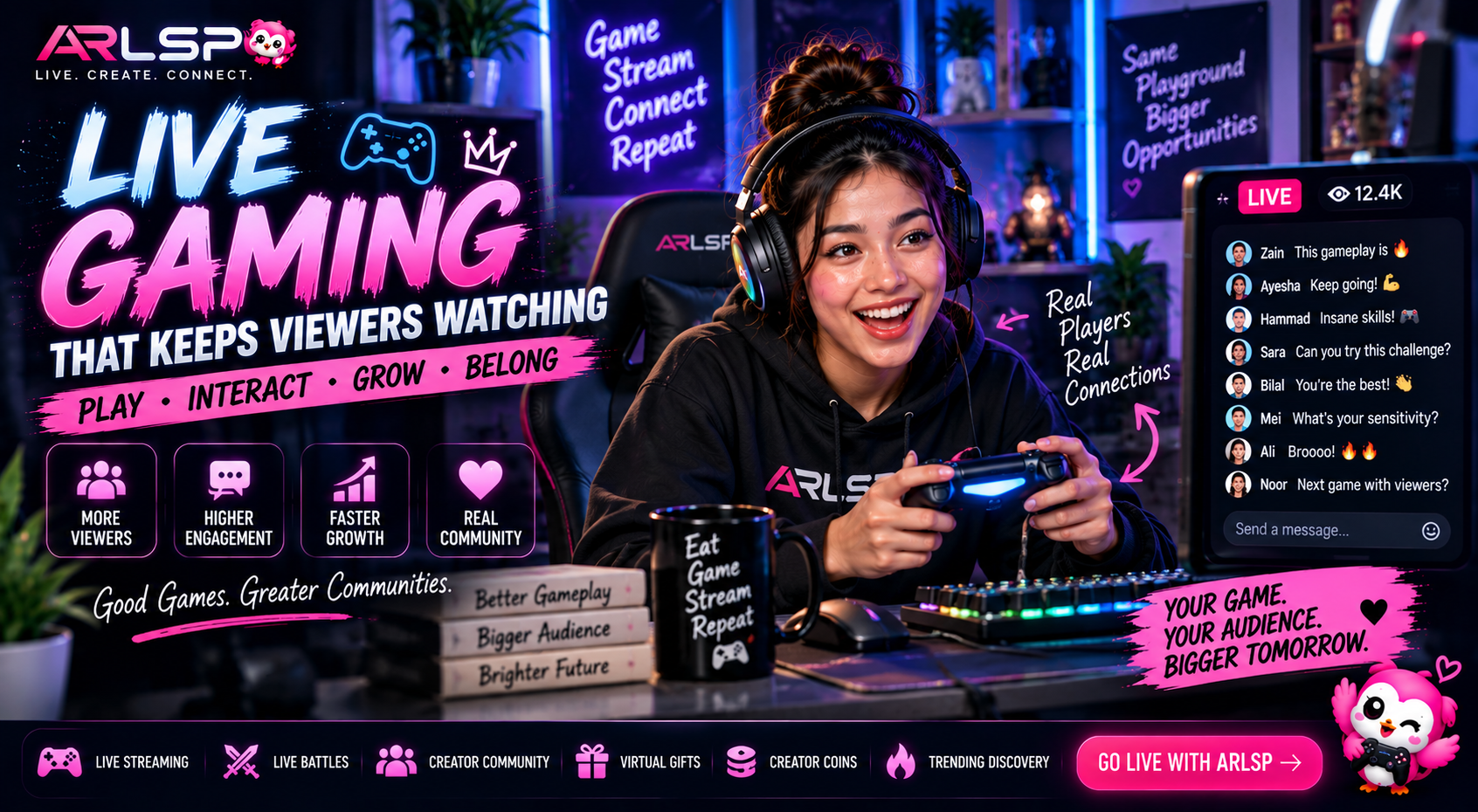
Good Gameplay Alone Is Not Enough to Build a Live Audience
You can be excellent at a game and still have an empty livestream.
That surprises a lot of new gaming creators.
They think:
If I play well, people will watch.
Sometimes they will.
But viewers have thousands of gaming streams, clips and videos competing for their attention.
Skill can help.
It is not the whole experience.
Successful live gaming adds something prerecorded gameplay cannot easily reproduce:
the viewer gets to be there while it happens.
They can react.
Ask questions.
Suggest strategies.
Challenge the streamer.
Celebrate a win.
Watch a mistake happen in real time.
That interaction can turn ordinary gameplay into entertainment.
The goal is not simply to stream a game.
The goal is to create a gaming experience worth joining.
What Is Live Gaming?
Live gaming is the real-time streaming of gameplay to an online audience while the creator plays.
Depending on the stream, viewers may be able to:
Watch gameplay
Comment
React
Ask questions
Suggest challenges
Influence decisions
Interact with the streamer
Participate in community conversations
This makes game streaming different from simply uploading recorded gameplay.
A recorded video shows what happened.
A live gaming stream lets the audience experience what is happening.
That difference creates the opportunity for interaction.
Live Gaming vs Recorded Gameplay
Recorded gameplay gives creators more control.
They can:
Cut boring sections
Edit mistakes
Add effects
Choose the best moments
Improve pacing
Record again
Live gameplay is different.
Everything happens in the moment.
A bad decision stays.
A surprising win happens in front of everyone.
A viewer comment can change the direction of the stream.
That unpredictability is part of the appeal.
Recorded gaming content can be polished.
Live gaming can feel alive.
The strongest gaming creators often use both.
Why Do People Watch Game Streaming?
Not everyone watches gaming streams for the same reason.
Some viewers want to learn.
Others want entertainment.
Some watch a particular game.
Others are there for the creator.
Common reasons include:
Learning strategies
Watching skilled gameplay
Enjoying the creator's personality
Following a challenge
Joining a community
Watching competitive moments
Seeing funny reactions
Discovering a game
Participating in live conversation
Understanding why people watch helps creators build better streams.
If your stream offers nothing beyond gameplay someone could find anywhere else, it becomes harder to stand out.
The Game Gets the Click. The Streamer Gets the Return Visit.
A viewer may initially discover you because of the game.
They may come back because of you.
That distinction matters.
Imagine someone searches for or discovers a live gaming session.
They like the game.
But there are hundreds of other people playing it.
Why should they return to your stream?
Maybe you are:
Funny
Educational
Highly competitive
Calm and analytical
Great with viewers
Known for difficult challenges
Focused on helping beginners
Running unusual game formats
The strongest gaming creators develop a recognizable reason to watch.
Give Every Gaming Stream a Clear Concept
Weak stream idea:
Playing games live.
Stronger:
Can I reach the next rank without losing a match?
Weak:
PUBG live.
Stronger:
Viewers choose my loadout every round.
Weak:
Mobile gaming.
Stronger:
Testing whether this beginner strategy actually works live.
A clear concept gives the viewer a story.
Something is happening.
Something may succeed or fail.
There is a reason to stay.
Challenges Create Natural Watch Time
Challenges work well because viewers want to see the outcome.
Examples:
Can I win five games in a row?
Can I finish this level without using upgrades?
Every time I lose, viewers add another restriction.
I only get three attempts.
Viewers choose my character.
The challenge gives the stream structure.
Instead of endless gameplay, the audience follows progress toward a goal.
Let Viewers Influence the Gameplay
Live content becomes much more interesting when viewers can affect what happens.
You can ask:
Which character should I use next?
Should I take the safe route or the risky one?
Which weapon should I try?
Should we restart or keep going?
Which challenge comes next?
Now the audience has a stake in the result.
If their choice causes something amazing—or disastrous—they feel part of the moment.
Simple Choices Get More Participation
Avoid making every audience question complicated.
Instead of:
What strategy would everyone recommend considering the current competitive meta?
try:
A or B?
or:
Attack or defend?
or:
Left or right?
Easy participation creates momentum.
Once viewers comment once, they may be more likely to join the conversation again.
Narrate What You Are Thinking
Silent gameplay can be difficult for new viewers to connect with.
You do not need to talk constantly.
But explain important decisions.
For example:
I'm not pushing this fight yet because we don't have enough information.
or:
I'm taking this route because the other side is usually crowded.
This does two things.
It helps beginners learn.
And it gives experienced viewers something to discuss.
Your thought process becomes part of the content.
Explain the Stream to People Who Join Late
Live audiences change constantly.
Someone who joins 30 minutes into a stream may have no idea what is happening.
Give quick context occasionally.
For example:
If you're just joining, viewers have given me three challenges tonight. I've completed two, and this is the final one.
That immediately tells the new viewer:
What is happening
Why it matters
What is coming next
They can join the story without watching from the beginning.
Do Not Spend Too Much Time in Menus and Waiting Screens
Every game has downtime.
Matchmaking.
Loading screens.
Menus.
Setup.
Those moments do not have to be boring.
Use them for:
Viewer questions
Quick discussions
Recapping the last match
Explaining the next challenge
Reading comments
Asking the audience to vote
The game may pause.
The stream should not.
Turn Failure Into Entertainment
New streamers often become embarrassed when they lose.
But failure can produce the best moments.
A bad mistake.
An unexpected defeat.
A terrible decision.
These can become:
Funny reactions
Audience jokes
Running community references
Short-form clips
Future challenges
Live gaming does not need perfection.
Sometimes viewers enjoy seeing how the creator responds when everything goes wrong.
Personality Matters More When Gameplay Slows Down
A great game can create excitement on its own.
But quiet sections reveal whether the streamer can hold attention.
You do not need to become artificially loud.
Different creator personalities work.
Some successful streamers are energetic.
Others are calm.
Some teach.
Some joke.
Some focus heavily on strategy.
The important thing is to develop a natural style viewers can recognize.
Avoid Copying Another Streamer's Personality
You can learn from successful creators.
But imitating their voice, humor and reactions usually feels unnatural.
Your advantage is that nobody else can reproduce your exact:
Experiences
Perspective
Humor
Community
Gaming preferences
Reactions
Use inspiration for formats.
Keep your personality your own.
Create Recurring Gaming Segments
Recurring elements give people a reason to return.
Examples:
Viewer Challenge of the Day
One-Life Run
Beginner Strategy Breakdown
Friday Live Battle
Audience Chooses My Setup
Last Match Challenge
Game of the Week
A recurring segment can eventually become something your community expects.
That expectation helps build habits.
Turn Your Live Gaming Stream Into a Series
One stream disappears quickly.
A series creates continuity.
Instead of:
Playing ranked tonight.
try:
Road to the Top Rank — Day 4.
Now yesterday matters.
Tomorrow matters.
The audience can follow the journey.
That is especially useful for progression-based games.
Give the Audience a Reason to Return Tomorrow
Near the end of the stream, tell people what happens next.
For example:
Tomorrow we're trying the same challenge, but viewers control every weapon choice.
Or:
Next stream we're facing the creator who beat me last week.
The next stream becomes part of the current story.
That is stronger than simply saying:
Follow for more.
Live Gaming and Community Go Together Naturally
Gaming communities already form around:
Games
Teams
Characters
Strategies
Competitive scenes
Shared challenges
Live streaming adds a person at the center of that conversation.
A gaming creator can become a host for people who share the same interests.
That is why comments should not always be treated as interruptions.
They can become part of the entertainment.
Recognize Regular Viewers
When appropriate, acknowledge people who return.
You might say:
You were here for yesterday's disaster too.
That small recognition creates familiarity.
Over time, regular viewers may begin recognizing each other as well.
Now the stream is developing a community rather than simply collecting anonymous views.
Do Not Make New Viewers Feel Like Outsiders
Community is useful.
But inside jokes can become a problem if new viewers understand nothing.
Balance both.
Keep recurring community moments while still explaining enough context for someone new to join.
A healthy gaming community should feel welcoming, not closed.
Live Battles Can Add Creator-vs-Creator Entertainment
Competition between creators gives a gaming audience an easy story to follow.
Creator A vs Creator B
Someone wins.
Someone loses.
Viewers choose sides.
The energy changes.
ARLSP includes Live Battles, giving creators an existing creator-versus-creator format that can add competition and audience participation to live sessions.
The format can be particularly useful when creators want to collaborate while keeping the stream entertaining.
Collaboration Can Help Gaming Creators Reach New Audiences
Gaming does not always need to be a solo activity.
Creators can:
Compete
Team up
Run challenges
Discuss strategies
Play community games
Host joint sessions
A collaboration gives each audience a chance to discover another creator.
But the collaboration should still create good content.
Do not invite another creator only because they have followers.
Give the session a concept.
Gaming Live Streams Need Peaks and Breaks
A two-hour stream should not feel identical from beginning to end.
Create variation.
For example:
Opening: explain today's challenge
Match 1: normal gameplay
Viewer vote: choose next restriction
Match 2: challenge begins
Break: answer questions
Creator competition: another player joins
Final match: highest-stakes attempt
Now the session has different phases.
This makes the stream easier to follow.
Build Anticipation Before Important Moments
If something meaningful is coming, tell viewers.
This is my final attempt.
If we win this one, we reach the target.
The next round decides the challenge.
Anticipation gives people a reason not to leave.
Good livestreaming often involves helping viewers understand why the next moment matters.
Do Not Fake Excitement
You do not need to pretend every match is historic.
Constant exaggerated reactions become tiring.
Real excitement works better because viewers can tell when something genuinely matters to you.
Build context.
Then let the moment speak for itself.
Turn Live Gameplay Into Short Videos
Gaming streams naturally create short-form content.
After each stream, look for:
Best plays
Funny failures
Strong reactions
Viewer challenges
Unexpected results
Useful tips
Competitive moments
One long stream can produce several video clips.
That gives the stream value beyond the people who watched live.
A Gaming Clip Still Needs Context
Do not automatically upload a random 20-second gameplay section.
Someone who was not in the live stream may not understand why it matters.
Add context.
Instead of:
random clip
try:
Viewers told me this strategy would never work. Then this happened.
Now there is a story.
The gameplay becomes more accessible to new viewers.
Use Short Video to Bring People Into Your Live Gaming Sessions
Short-form content can become your discovery engine.
For example:
Tonight I'm attempting this challenge live. Viewers choose every decision.
Or publish yesterday's best moment:
This was the last 15 seconds of yesterday's live match.
Then mention the next session naturally.
The content loop becomes:
Game Stream
↓
Strong Moment
↓
Short Video
↓
New Viewer
↓
Next Live Stream
This lets live gaming and short-form video support each other.
Live Gaming for Mobile Creators
You do not necessarily need an advanced computer setup.
Mobile gaming creates its own opportunities.
Creators can stream:
Mobile multiplayer games
Competitive games
Casual games
Strategy games
Community challenges
For mobile creators, the same rules still apply.
The technology may be different.
The audience still wants:
Clear content
Interaction
Entertainment
A reason to return
Mobile Games Live Can Be More Accessible for New Creators
Many creators already have:
A smartphone
A game
Internet access
That can lower the barrier to starting.
But accessibility also means competition.
Your format becomes important.
Do not simply stream a popular game.
Create a reason to watch your version of that game.
Game Streaming for Beginners
If you are new to streaming, start simple.
Choose:
One game
One stream format
One clear challenge
One audience interaction
For example:
Tonight I'm playing three ranked matches, and viewers choose my strategy in the final match.
That is enough.
You do not need 20 overlays and ten complicated segments.
Learn how to hold a conversation while playing first.
You Do Not Need to Be a Professional Gamer
Entertainment value can come from many places.
Some viewers want elite gameplay.
Others enjoy:
Beginner journeys
Funny mistakes
Learning together
Community challenges
Personality
Progress
A creator trying to improve publicly can be interesting because the audience sees the journey.
Do not assume you must already be exceptional before you start streaming.
Educational Game Streaming Can Build Authority
If you understand a game well, teach.
Explain:
Beginner mistakes
Strategy
Character choices
Map decisions
Equipment
Timing
Competitive decisions
A viewer may discover you while trying to become better at the game.
Useful gaming content can create very loyal audiences because people have a reason to return and learn.
Entertainment-Focused Gaming Needs Stronger Personality and Formats
If education is not your style, build around entertainment.
Use:
Challenges
Reactions
Competitions
Audience decisions
Creator collaborations
Funny consequences
Recurring formats
You are no longer simply showing gameplay.
You are creating a show around gameplay.
Esports Live Content Has a Different Audience Need
People watching esports live may care more about:
Competition
High-level play
Outcomes
Teams
Strategy
Commentary
If your content connects to competitive gaming, help viewers understand the stakes.
Why does this match matter?
Who is favored?
What strategy is being used?
What should viewers watch for?
Context makes competition more interesting.
Gaming Streams Need Good Audio More Than Fancy Visuals
A creator can often begin without the most expensive camera.
But poor audio can quickly make a stream difficult to watch.
Viewers should hear:
Your voice clearly
The game without overpowering you
Other participants appropriately
Test levels before you start.
An expensive visual setup cannot compensate for audio nobody can understand.
Do Not Overload the Screen
Gaming creators sometimes add:
Huge overlays
Multiple alerts
Chat boxes
Animations
Logos
Labels
Donation panels
until very little gameplay remains visible.
Keep important information clear.
The design should support the stream.
Not compete with it.
Your Stream Title Should Explain the Experience
Generic title:
Gaming Live
Better:
Road to Diamond Rank — Viewers Choose My Final Loadout
Generic:
Live Gameplay
Better:
Can I Beat This Level Without Taking Damage?
Use the title to communicate the concept.
This can help both discovery and viewer expectations.
Choose a Gaming Platform Based on More Than the Go Live Button
Creators evaluating a gaming platform or live streamer platform should consider:
Live streaming tools
Audience interaction
Creator discovery
Community features
Creator collaboration
Notifications
Monetization opportunities
Mobile accessibility
The stream itself is only one part of building a gaming audience.
What happens between streams matters too.
How ARLSP Fits Into Interactive Gaming Content
ARLSP's broader live-social ecosystem can support gaming creators beyond simply broadcasting gameplay.
Confirmed relevant features include:
Live streaming
Live Battles
Creator communities
Messaging
Notifications
Virtual gifts
Creator coins
Trending/discovery features
QR profile sharing
For a gaming creator, the opportunity can look like:
Gameplay
↓
Live Interaction
↓
Viewer Participation
↓
Live Battles / Creator Competition
↓
Community
↓
Returning Audience
The goal is not simply to be another person streaming a game.
It is to give viewers a reason to participate in your version of the experience.
Virtual Gifts Can Become Part of Audience Support
ARLSP includes virtual gifting as part of its creator ecosystem.
For creators, virtual gifts can give audiences another way to interact and show support during live activity.
But the stream should not revolve around constantly asking for gifts.
Content comes first.
The audience should have a reason to enjoy the session regardless of whether they spend anything.
Community trust matters more than short-term pressure.
A Simple Interactive Gaming Stream Format
If you need a practical starting point, try this:
Opening
Tonight I have three attempts to complete this challenge.
First Game
Play normally while explaining your decisions.
Audience Vote
Let viewers choose the next restriction.
Second Game
Use the viewer-selected challenge.
Q&A
Answer gaming questions during downtime.
Final Game
Make it the highest-stakes attempt.
Closing
Recap the best moment and announce the next challenge.
Simple.
Clear.
Repeatable.
A Pre-Stream Gaming Checklist
Before going live, ask:
Topic: What are we doing today?
Goal: Is there something viewers can follow?
Interaction: How can viewers participate?
Opening: What will I say immediately?
Downtime: What will I do during loading screens?
Clips: What moments could become short content?
Next stream: Is there a reason for people to return?
This small amount of preparation can transform an ordinary game broadcast.
Common Live Gaming Mistakes
Playing Silently
New viewers have little reason to connect.
Waiting for People to Join
Start the content immediately.
No Stream Concept
Gameplay without a story can feel endless.
Ignoring Chat
Live interaction is one of your biggest advantages.
Copying Famous Streamers
Build your own format and personality.
Overcomplicated Setup
Start with what you actually need.
Streaming for Too Long Without Structure
Longer is not automatically better.
Treating Every Viewer Like a Number
Community grows through relationships.
Watch Time Comes From Reasons to Stay
Do not ask only:
How do I make people watch longer?
Ask:
What are they waiting to see?
Maybe they are waiting for:
The result of a challenge
The next match
Their chosen strategy
A creator battle
The final attempt
An answer to a question
Strong live gaming creates future moments the viewer wants to reach.
That is more powerful than simply asking people not to leave.
Growth Comes From More Than Being Good at the Game
Skill matters.
But live gaming combines multiple skills:
Gameplay
Communication
Entertainment
Interaction
Consistency
Community
A creator who develops all of them becomes much harder to replace.
Someone may find you because of the game.
They may stay because of the experience.
And they may return because they feel part of the community.
Make the Audience Part of the Game
That is the real opportunity of live gaming.
Recorded gameplay says:
Watch what I did.
Interactive live gaming says:
Be here while we find out what happens.
That difference matters.
Create clear challenges.
Talk to viewers.
Let them make decisions.
Build recurring formats.
Turn great moments into short videos.
Collaborate with other creators.
And give viewers something worth returning for.
ARLSP's live streaming, Live Battles, communities, discovery, messaging and creator-interaction features can support that broader journey.
Do not simply stream the game.
Build an experience around it.
Frequently Asked Questions
What is live gaming?
Live gaming is real-time gameplay streamed to an online audience, often with live interaction between the streamer and viewers.
How is game streaming different from recorded gameplay?
Recorded gameplay can be edited before publication, while game streaming happens in real time and allows viewers to interact while the creator plays.
How can I make live gaming more entertaining?
Use challenges, audience voting, commentary, creator competitions, recurring formats and clear goals that give viewers reasons to stay.
Do I need to be a professional gamer to start streaming?
No. Creators can build audiences through personality, entertainment, education, improvement journeys and community interaction as well as gaming skill.
How can viewers participate in a gaming stream?
Creators can let viewers choose characters, strategies, challenges, equipment or what happens next during the stream.
Can gaming livestreams become short-form videos?
Yes. Wins, failures, reactions, audience challenges and useful tips from live gameplay can all become short video clips.
What are Live Battles?
Live Battles are creator-versus-creator live experiences. ARLSP includes Live Battles as one of its confirmed creator interaction features.
Is ARLSP suitable for gaming creators?
ARLSP supports live streaming alongside features relevant to interactive creator content, including Live Battles, communities, messaging, notifications, virtual gifts and discovery functionality.